October 30, 1951
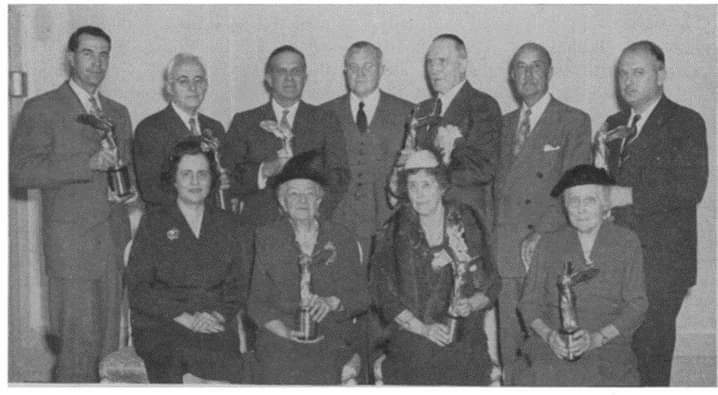
In the Summer of 1951 the Lasker Award was offered to Bill W by the American Public Health Association. He declined the award for himself but suggested it be given to AA as a whole. The Lasker Foundation replied favorably. The Trustees voted to accept the award subject to Conference approval by mail poll of the Delegates. However, they declined a cash grant of $1,000 ($9,200 today). On October 30, the American Public Health Association presented the award to AA (Bernard B Smith accepting) at the San Francisco Opera House. (AACOA viii, 4, LOH 136, PIO 350, NHBP 12-13)
ALCOHOLICS ANONYMOUS. The American Public Health Association presents a Lasker Group Award for 1951 to Alcoholics Anonymous in recognition of its unique and highly successful approach to that age-old public health and social problem, alcoholism. Since its founding 16 years ago, Alcoholics Anonymous has brought recovery to more than 120,000 chronic drinkers formerly thought hopeless. Today this world fellowship of 4,000 groups, resident in 38 countries, is rehabilitating 25,000 additional persons yearly. In emphasizing alcoholism as an illness, the social stigma associated with this condition is being blotted out.
Alcoholics Anonymous works upon the novel principle that a recovered alcoholic can reach and treat a fellow sufferer as no one else can. In so doing, the recovered alcoholic maintains his own sobriety; the man he treats soon becomes a physician to the next new applicant, thus creating an ever-expanding chain reaction of liberation, with patients welded together by bonds of common suffering, common understanding and stimulating action in a great cause.
This is not a reform movement, nor is it operated by professionals who are concerned with the problem. It is financed by voluntary contributions of its members, all of whom remain anonymous. There are no dues, no paid therapists, no paid professional workers. Historians may one day recognize Alcoholics Anonymous to have been a great venture in social pioneering which forged a new instrument for social action; a new therapy based on the kinship of common suffering; one having vast potential for the myriad of other addictions and human sufferings.